About Destination
Home
About Destination
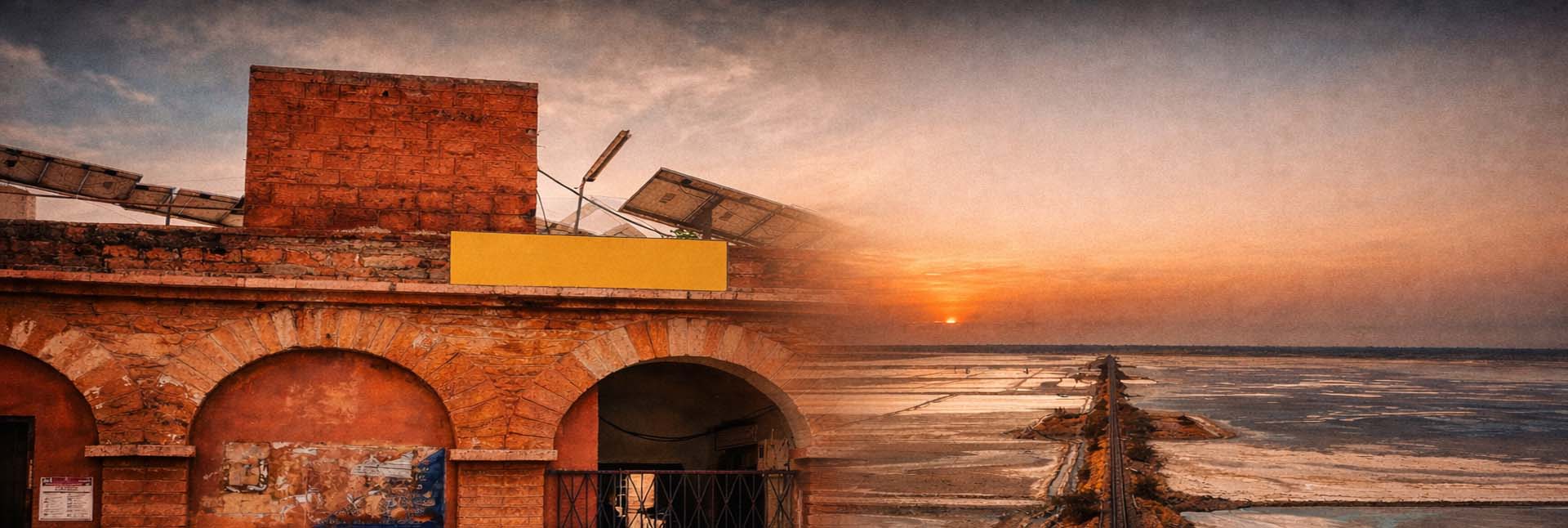
Approximately 85 Km from the bustling city of Jaipur lies the vast saline wetland of Sambhar Lake. Around the lake, there is the Sambhar town, a fusion of narrow lanes, heritage architecture and Colourful bazaars, cinematic havelis, colonial era offices and above all lively people in colourful turbans. Many Bollywood movies like Delhi – 6, Gangs of Wasseypur and more have been shot in this town.
There is a 20th century town hall full of books and colonial surveys, college students use it as library. Aside from architecture the town is famous for its sweet delicacy ‘the feeni’ which can be found at sweet shops all around the town. Small carts drawn by donkeys can be found in the market giving the town reminding us of the bygone era.
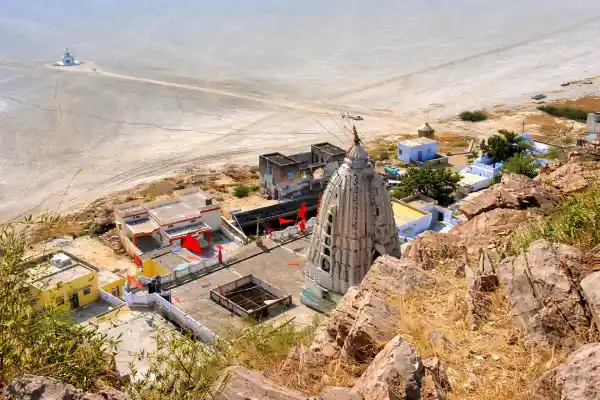
Sambhar was founded in the 6th century by Raja Vasudev, a devotee of Goddess Shakambari. Pleased with his devotion, she turned a forest into jewels, later transforming them into the Sambhar Salt Lake. Her temple overlooks the lake and hosts a popular religious fair every August.
Later the salt lake became an important location along the silk route connecting Jaipur to Jaisalmer. Many traders used to stop here and exchanged salt for other goods. There is a famous legend of Lakhi Banjara who had a large carvan of camels, his songs are still sung in the town on cultural occasions. A well-established salt market existed here with 600 salt traders at its peak.
In 1709, the salt lake itself was so vast that it was divided between the Rajput Kingdoms of Jaipur & Marwar. The rulers of Jaipur and Jodhpur jointly owned the lake, and in the year 1870 Sambhar Lake was leased to the British.
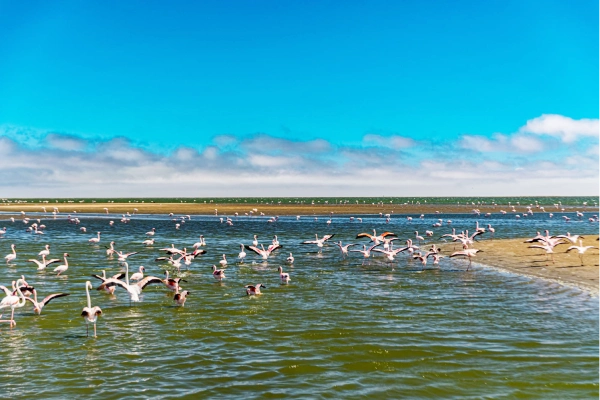
Sambhar Lake has been designated as a Ramsar Site (recognized wetland of international importance) and is therefore ecologically important. The wetland is a breeding area for thousands of flamingos and other migratory birds who come from as far as Siberia during the winters.
A lot of migratory birds such as flamingoes can also be seen in large flocks. Other animals found here are Nilgai, desert fox, wild cat and small birds and reptiles.
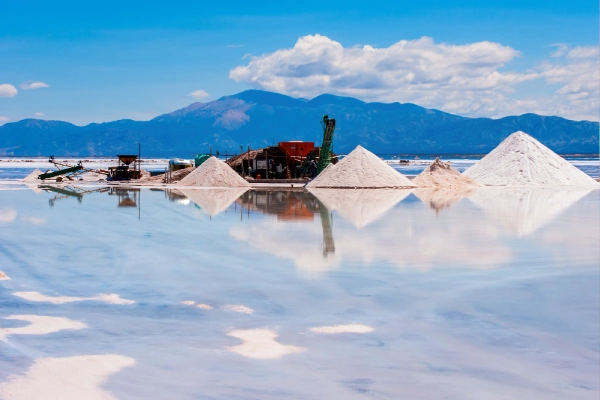
The salt processing plant in Sambhar is the place to witness all the steps of salt production. Owing its origin to the colonial era, this factory gives sight of many salt-carrying wagons and narrow gauge trains.
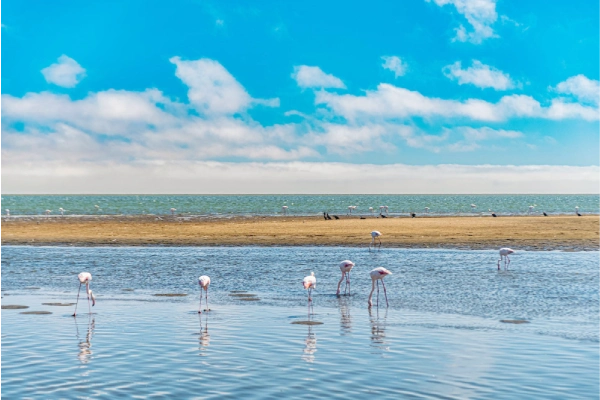
Sambhar lake is popularly known as a home to various kinds of flamingos. Every year, a large number of birds from the cold northern regions of Central Asia come to Sambhar Lake. Apart from flamingoes one can also spot black-headed gull and Northern Shoveller in the lake. The best time to visit Sambhar Lake in Rajasthan, India for bird watching is between October and March. During this time, the weather is pleasant, and the lake is home to thousands of migratory birds.
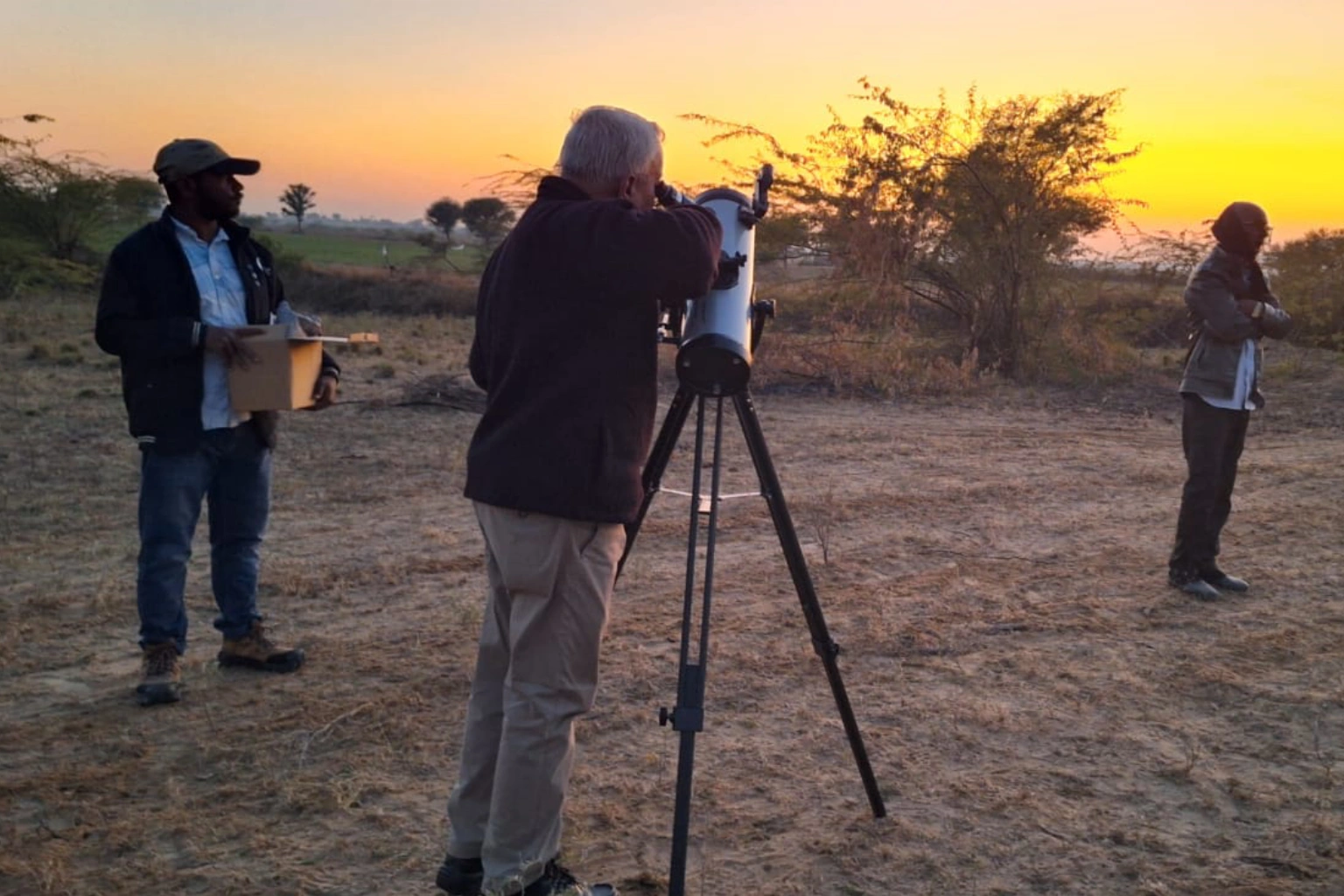
Sambhar provides a magnificent view at night, a literal escape to the Milky way! The sky becomes so clear at night that this place becomes apt destination for astro-photographers. One can spot the best views of Milky Way galaxy on a new moon day.
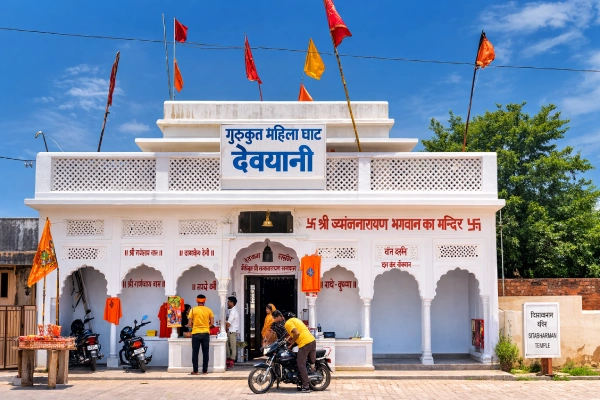
An old temple with small kund is present around the serene location. In Indian mythology Devyani temple is dedicated to daughter of Guru of Asuras Saint Shukracharya. It is said that marriage of Devyani and Yayati was held at this spot.
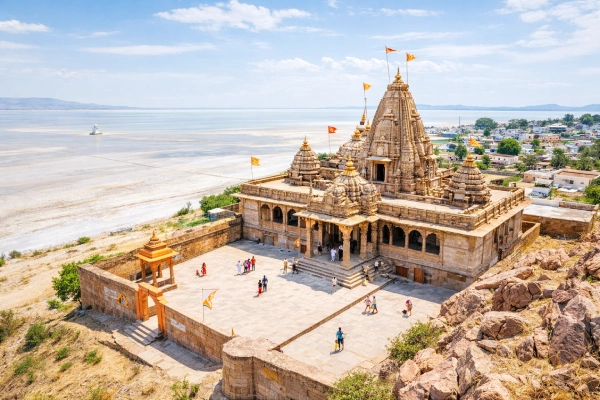
On the sides of Devyani Kund, four ancient Shiva temples are established and one of them is Baba Jageshwar temple. According to local folklore the lingam at this temple is very ancient and no one has been able to know its actual depth. One local with us remarked that it was dug 80 feet but the Shivling remained without a crack. I was lucky to attend the evening aarti at this temple and was mesmerised with the Naliasar
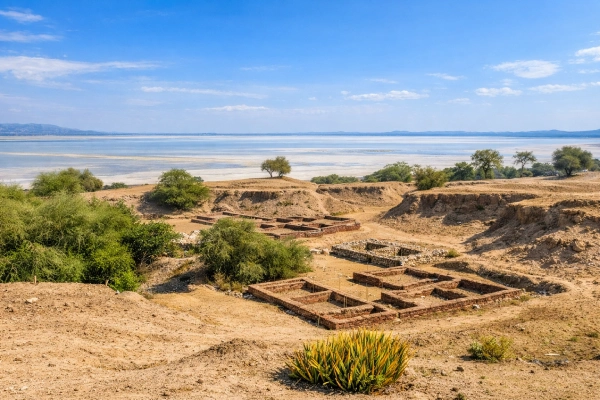
It is the site of archaeological excavations and is located at a distance of 4 kms from Sambhar. In an excavation conducted in Sambhar in 1934, a large number of terracotta figurines and stoneware were found. Most of these sculptures excavated from Sambhar are presently housed in the Albert Hall Museum at Jaipur. Today birding is done at this site.
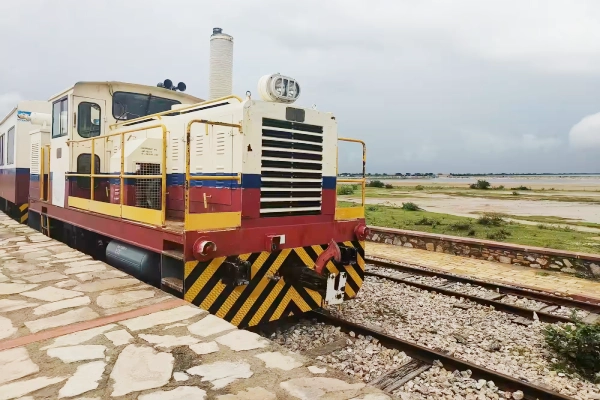
A salt train runs around the salt lake to collect salt and a separate line for a tourists is also run by tourism department in form of a 4 bogey railway from Sambhar to Jhapok.
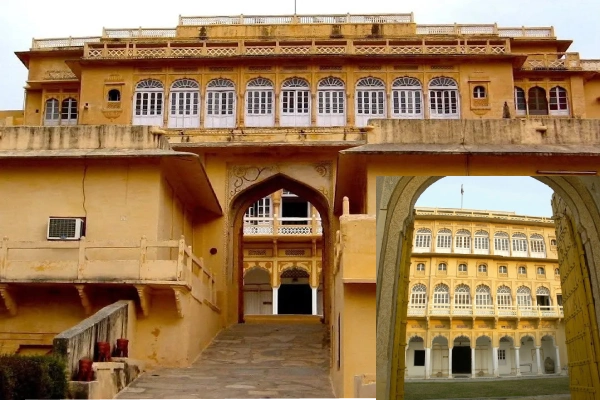
A former fortress, now a heritage hotel, Roopangarh fort is an ancient site offering historical know about of the area. It was sited at strategic point atop a hill to the north of Kishangarh controlling the important trade route to the Sambhar Salt Lake. Known for its unmatched architecture style, Roopangarh Fort also served as the strategic place for the Rajputana movements. Built by best Rajasthan stones and marbles, it has royal decorated interiors.
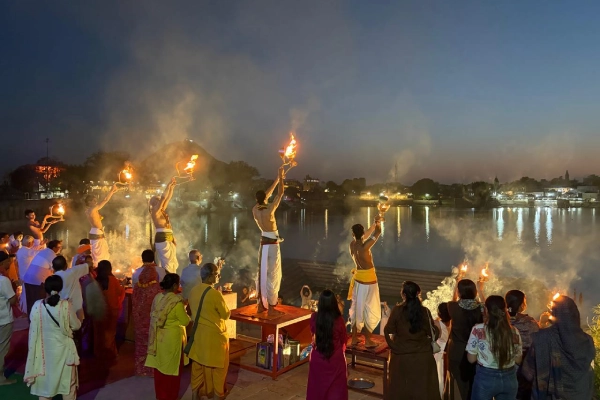
Situated 96km away from Sambhar is the famous town of Pushkar. Pushkar whereas per mythology Lord Bharama resides, one of the oldest holy towns of India, like Varanasi is place of Lord Shiva. Being very different from Varanasi, with a mixed architecture between the medieval architecture of the town and an even older religio-cultural tradition. Pushkar is the only temple in India where Lord Brahma is worshipped. Lake architecture is also well maintained in form of giving comfort for holy dip to pilgrims. The 52 ghats rise up from the lake in that familiar cluster.